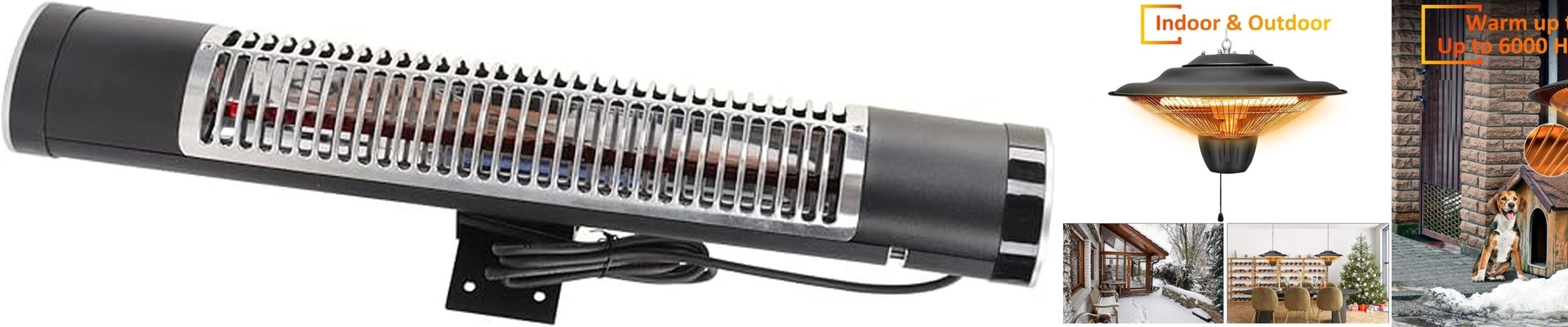

Stop Wasting Time Waiting for Your Oven to Warm Up
Let’s be honest: forced air is slow. If you’re using it for semiconductor processing, you know the drill. You heat the air, then you wait for that air to heat the part. It’s a middleman you just don’t need. It creates this annoying lag that eats into your day. We do things differently. We use IR emitters. Instead of warming up the room, infrared radiation hits your target directly. No middleman. No “warm-up” phase. You just turn it on, and the energy goes exactly where it needs to go.
The Secret is in the End Cap
Now, here is where things usually go wrong. High-wattage IR emitters get incredibly hot—especially at the ends. If you use standard metal caps, they tend to warp or oxidize when you push them to the limits your specs require. It’s a headache you don’t want. That’s why we use Ceramic end caps. Ceramic doesn’t flinch under heavy thermal loads. Plus, it acts as a great insulator between the high-voltage lead and the housing. This keeps you from dealing with short circuits, even when you’re packing your arrays tight. Even when the tube is glowing white-hot, the connection stays rock solid.
Getting Your Time Back
Switching to IR isn’t just a technical tweak; it’s about the clock. Forced air systems have a lot of “thermal inertia.” If you change your temperature setpoint, you’re stuck waiting minutes for the system to settle down. IR hits those targets in seconds. When you cut that wait time down for every single wafer or component, the math starts to look a lot better.
A Few Things to Keep in Mind
I won’t tell you it’s magic. There are trade-offs. IR is fast, but it’s directional. Forced air wraps around a part like a blanket, but IR is more like a spotlight. You have to be smart about your reflector angles, or you’ll end up with cold spots. And because the heat is so concentrated, you can’t slack on your cooling fans for the electronics. If your cooling isn’t up to spec, you’ll fry your controllers. But if you get that right? You can swap these into your old air ovens and see your cycle times drop by 30% to 50%. That’s a lot of extra breathing room in your production schedule.