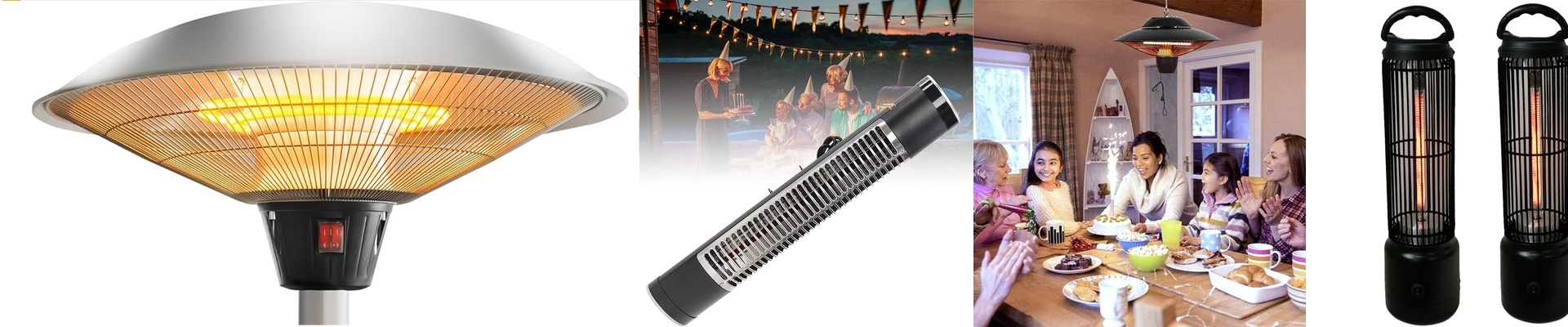
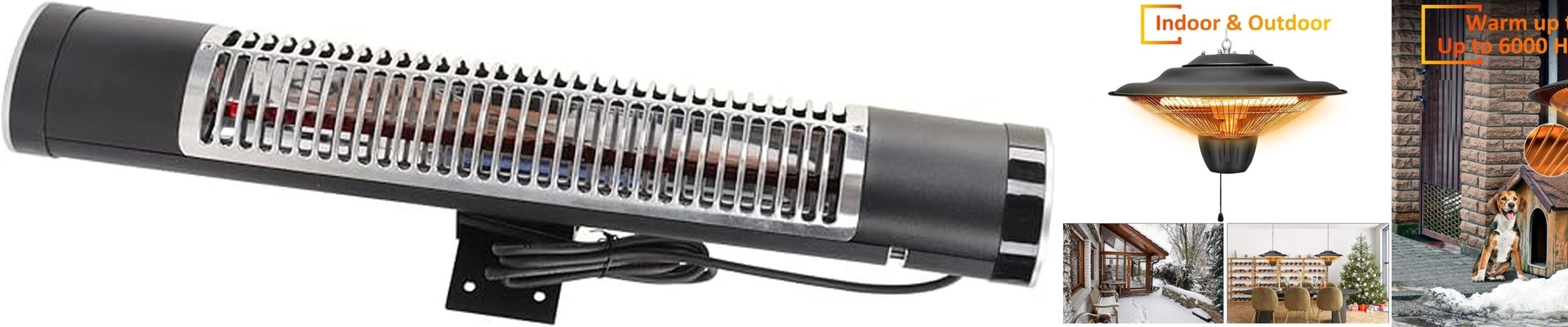
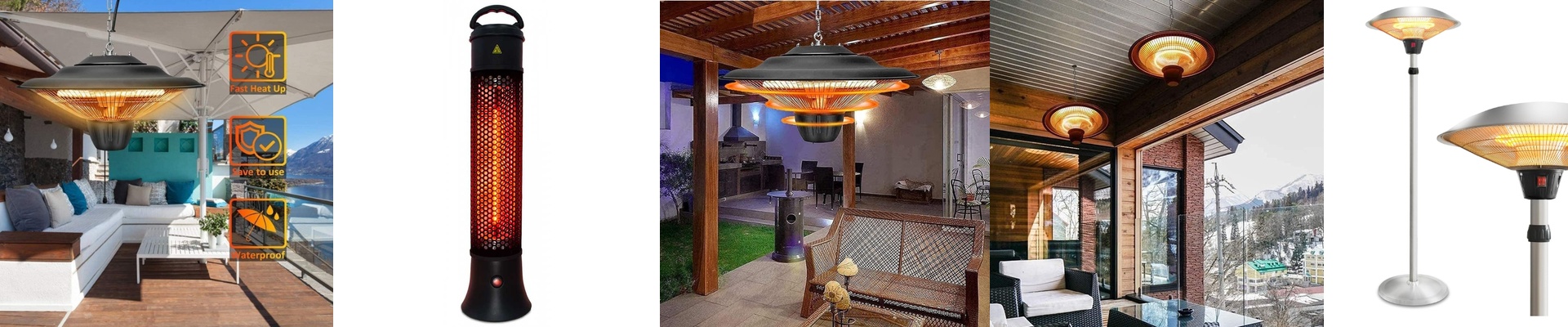
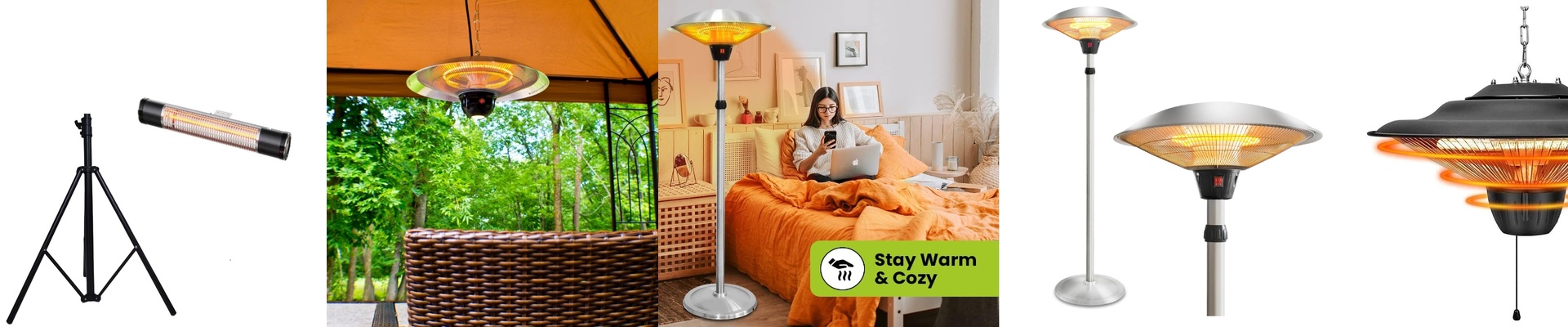
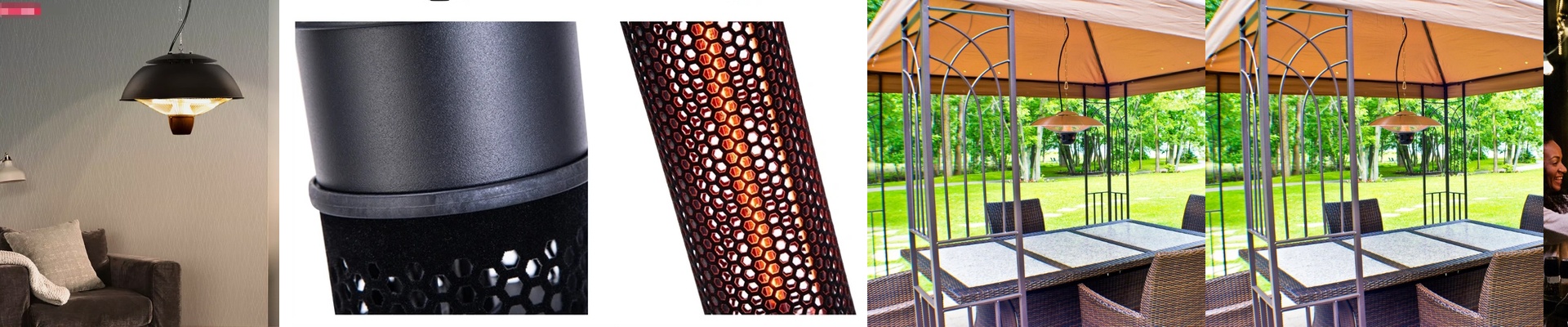

When the dinner rush hits and the evening air turns sharp, guests don’t want to wait around to warm up. They want to sit, order, and feel comfortable immediately. That’s why a commercial patio heater has to do more than just throw out heat—it has to be fast, dependable, and easy to control.
What matters under the hood
We build our commercial patio heaters around infrared radiant heat, using a high-output element that warms people and surfaces directly, instead of heating the empty air between. Guests feel the warmth within seconds, not minutes. In a restaurant environment, we spec these units for 240V hardwired connections where possible. Stable voltage and consistent output matter when you’re running service after service. The heaters use a sealed quartz/carbon-fiber-style emitter, built for frequent on-off cycling, and they’re paired with thermostat control plus standard safety protections like tip-over cutoff. For smart integration, the system connects to the building’s Wi-Fi or a smart-home controller, so you can schedule, monitor, and trigger heat remotely.
Why this works in real service
The real operational win is smart control. Before service starts, you can turn the patio heaters on from inside—no trudging outside in the cold, no wondering whether a unit is actually working. The moment guests are seated, infrared warmth hits the spot, which helps keep service moving and tables turning. Because the heat is directional, you aim it where people actually sit. That cuts down wasted warmth and makes the outdoor area usable earlier in the season and later into the night. For staff, the routine stays simple: set the schedule once, then tweak it as needed from the same dashboard you use for other systems.
What to keep in mind
Smart infrared patio heaters need a stable power supply, and in many setups, professional hardwiring to meet commercial safety expectations. Placement matters too. Keep units positioned to avoid direct rain exposure, and maintain clearances for airflow and safety. Smart control makes heating convenient, but the best results come when you plan the heater, the mounting height, and the coverage pattern together. That way, warmth lands where guests are seated—not just where the heater happens to be pointing.